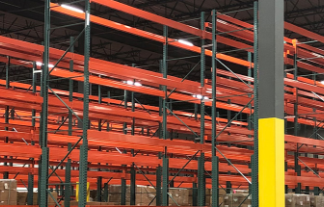
Efficient storage solutions are pivotal for businesses seeking to optimize their warehouse operations and improve space usage. Industrial pallet racking systems offer a robust, reliable option for maximizing storage efficiency. These systems play a crucial role in ensuring that goods are stored safely and can be accessed conveniently. As businesses grow, the demand for more advanced storage solutions becomes evident, prompting a closer look at how industrial pallet racking can be leveraged to meet these needs effectively.
Understanding Industrial Pallet Racking
Industrial pallet racking is a storage solution used to store materials on pallets in horizontal rows with multiple levels. This method of storage is common in warehouses, distribution centers, and retail facilities. It provides a systematic approach to storing goods, making it easier to organize, manage, and access inventory.
Benefits of Industrial Pallet Racking
- Increased Storage Capacity: By utilizing vertical space, more products can be stored in a smaller footprint.
- Improved Accessibility: Goods are easily accessible thanks to the racking system’s organization, which enhances operational efficiency.
- Enhanced Safety: Properly designed racking systems reduce the risk of product damage and improve worker safety.
- Scalability: Racking systems can be easily adjusted or expanded as storage needs change.
Types of Industrial Pallet Racking Systems
There are several types of pallet racking systems, each designed to cater to specific storage needs. Here are some popular options:
Selective Racking
This is the most common type of industrial pallet racking. It provides easy access to every pallet and is suitable for warehouses with a wide variety of products. Selective racking is versatile and can be adapted to most storage requirements.
Drive-In and Drive-Through Racking
These systems are ideal for storing large quantities of homogeneous products. Drive-in racking allows forklifts to drive directly into the storage bay, while drive-through racking offers access from both ends. These systems maximize space but may limit access to individual pallets.
Push Back Racking
Push back racking is a high-density storage system that allows for multiple pallets to be stored on a slight incline. When a new pallet is loaded, it pushes the previous pallet back in the lane. This system is suitable for last-in, first-out (LIFO) inventory management.
Pallet Flow Racking
Also known as gravity flow racking, this system uses sloped racks with rollers or wheels to allow pallets to move easily from the loading end to the picking end. It is ideal for first-in, first-out (FIFO) inventory management.
Optimizing Warehouse Layout with Pallet Racking
To fully capitalize on the benefits of pallet racking, it is essential to optimize the warehouse layout:
- Conduct a thorough analysis of inventory and storage needs to select the most appropriate racking system.
- Design the layout to ensure optimal flow of goods, considering factors such as aisle width and forklift maneuverability.
- Incorporate technology such as warehouse management systems to track inventory levels and enhance operational efficiency.
Conclusion
Maximizing storage efficiency with industrial pallet racking is an achievable goal for businesses looking to optimize their warehouse operations. By selecting the right type of racking system and designing an efficient warehouse layout, businesses can improve their storage capacity, accessibility, and safety, ultimately leading to enhanced productivity and cost savings. For more insights into choosing the best racking system, consider exploring the offerings from leading providers in the industry.